
ABOUT ERIKA
"The moment that changed my life was not the one you're thinking of."
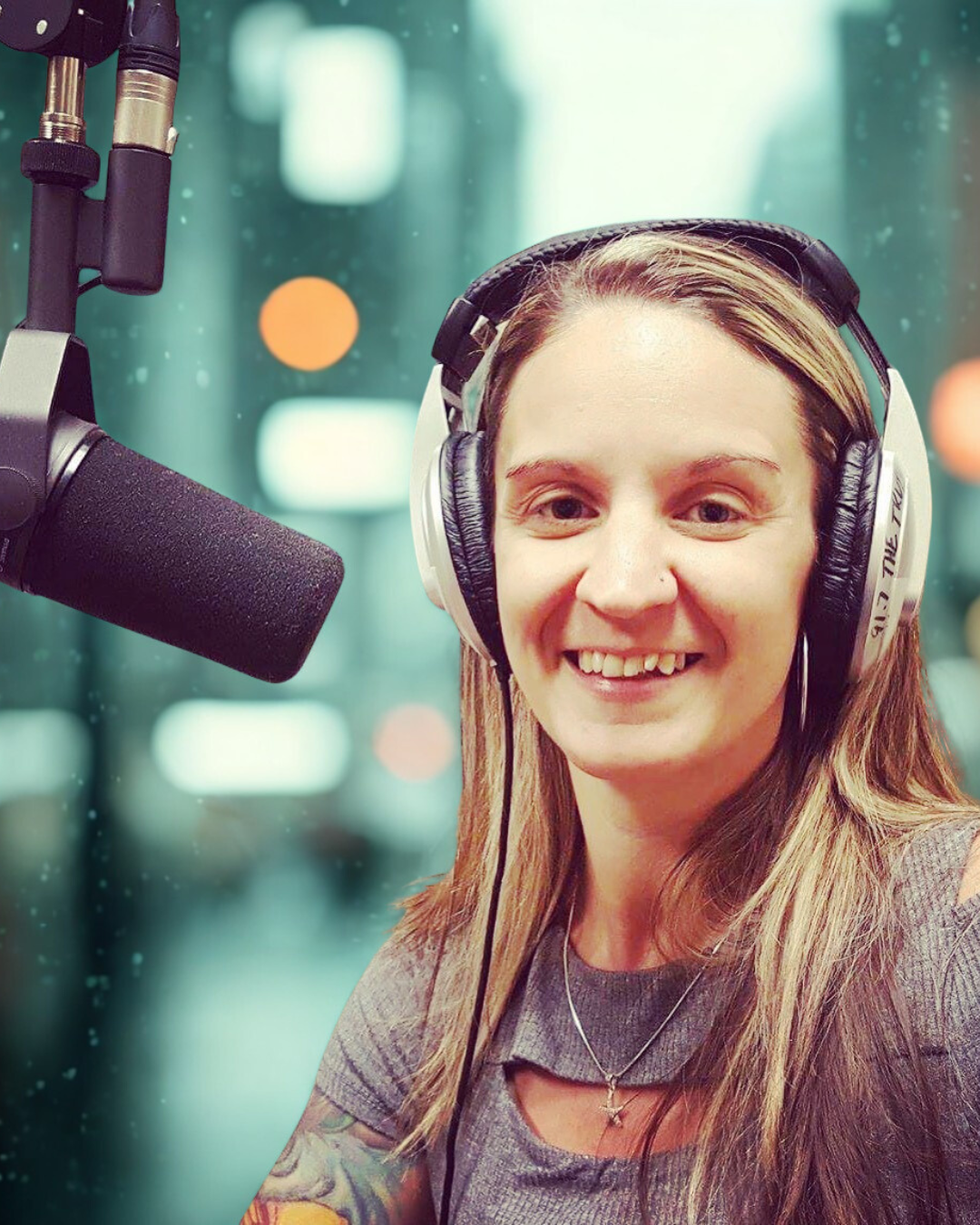
This is not just a story about what happened to Erika. It is a story about what she learned — and how that shift changed the way she lives, leads, and speaks.
"I have spent years learning that you can believe something fully and still be completely wrong about it.That discovery changed everything."
01
WHAT I BELIEVED
I thought it was love.
For a long time, I called it love. The intensity. The closeness. The way someone always seemed to be there, tracking my movements, my choices, my world. Somewhere along the way, I learned to mistake control for care — and I didn’t question it.
That belief shaped years of my life. Not because of what was done to me, but because of how I named what I was living through. Calling it love made it easier to explain away the things that never should have felt normal.
"I thought it was love. It wasn't. It was control, and I had given it a name that let it stay."
#ITWASNT
02
THE REAL TURNING POINT
I thought the injury changed everything.
I became paralyzed. People expected that to be the moment the dramatic before and after. And for a long time, I told the story that way too. Trauma. Survival. Recovery. A neat arc.
But the real turning point came quietly, years later, when I finally understood something that no one teaches you: my thoughts, not my circumstances, had been shaping my entire reality. The injury changed my body. But the story I told myself about it was shaping my entire life. And the moment I saw that, I could choose something different.
That realization was more transformative than anything that happened to my body. Once you become aware of how you’re thinking, everything starts to change.
"I thought it was the injury. It wasn't. It was the story I told about the injury and I finally had the power to rewrite it."
#ITWASNT
03
WHAT I LEARNED ABOUT STRENGTH
I thought surviving alone was the goal.
Somewhere along the way, I had absorbed the idea that strength meant doing it yourself. That asking for help was weakness. That the real proof of resilience was how much you could carry, and how far you could go without anyone knowing the weight.
Then I summited Mount Kilimanjaro, supported by porters who refused to let the mountain be the end of my story. And something broke open in me. Not because I made it. But because I made it with them. That summit did not belong to me alone. It belonged to all of us, or it belonged to none of us.
That is the truth I now carry everywhere I speak: real strength is not doing it alone. Real strength is knowing when to ask, when to trust, and when to let others carry you toward the top.
That climb, and everything it taught me, is the subject of the documentary Meandering Scars.
"I thought strength meant doing it alone. It doesn't. It means knowing who to trust and having the courage to let them help."
#ITWASNT
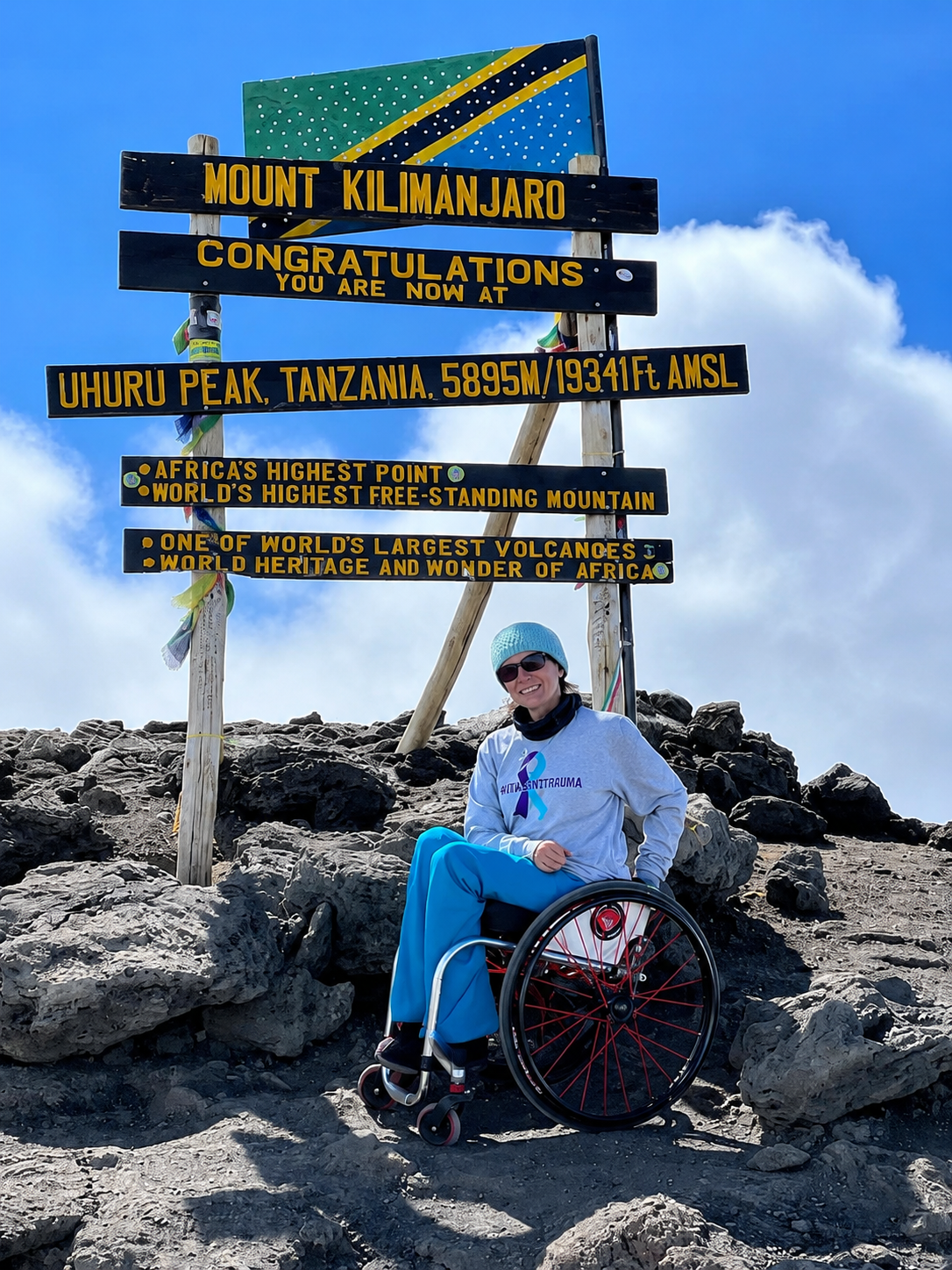
MOUNT KILIMANJARO
The summit that changed how she defines strength.
At 19,341 feet, Erika Bogan reached the peak of Africa's highest mountain, not by pushing through alone, but by being carried by porters who refused to let the mountain be the end of her story.
She uses this moment not as an inspiration story, but as a mirror. Most of us are standing at the base of something we believe we have to climb alone. Kilimanjaro taught her otherwise.
“The summit belongs to all of us, or it belongs to none of us”
TODAY
She turned the shift into the work.
Today, Erika speaks to organizations, universities, conferences, and communities about the one thing no one teaches us: the way we think about what happens to us shapes what comes next. Not the event. Not the circumstance. The interpretation.
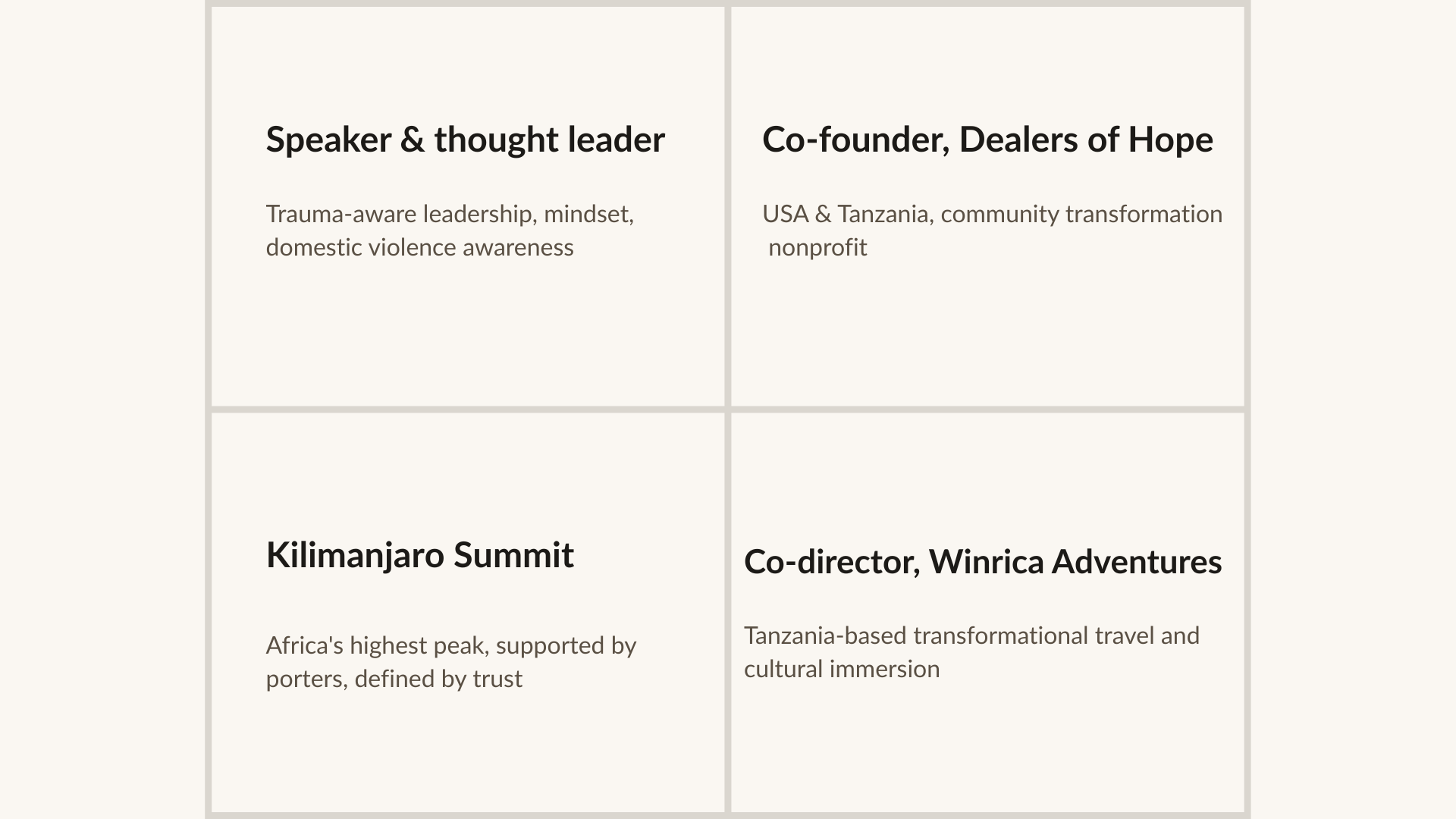
She co-founded Dealers of Hope Foundations, two nonprofits operating in the United States and Tanzania, dedicated to community transformation. She co-directs Winrica Adventures, where the lessons she teaches on stage come alive on the mountains and in the villages of East Africa. And through Hope Shift Hub, she works closely with people ready to change not just their thinking, but their lives.
The work is always the same: helping people recognize the stories shaping their lives — and reminding them they can choose differently.
"Awareness changes everything. The moment you stop automatically believing every thought, you create space for a different life."
WHAT SHE CARRIES TO THE STAGE
"Ready to bring this shift to your audience?"
Erika is available for keynotes, panels, workshops, and full-day immersives.